Why STEM/STEAM-Based Learning Is Crucial for Future Generations
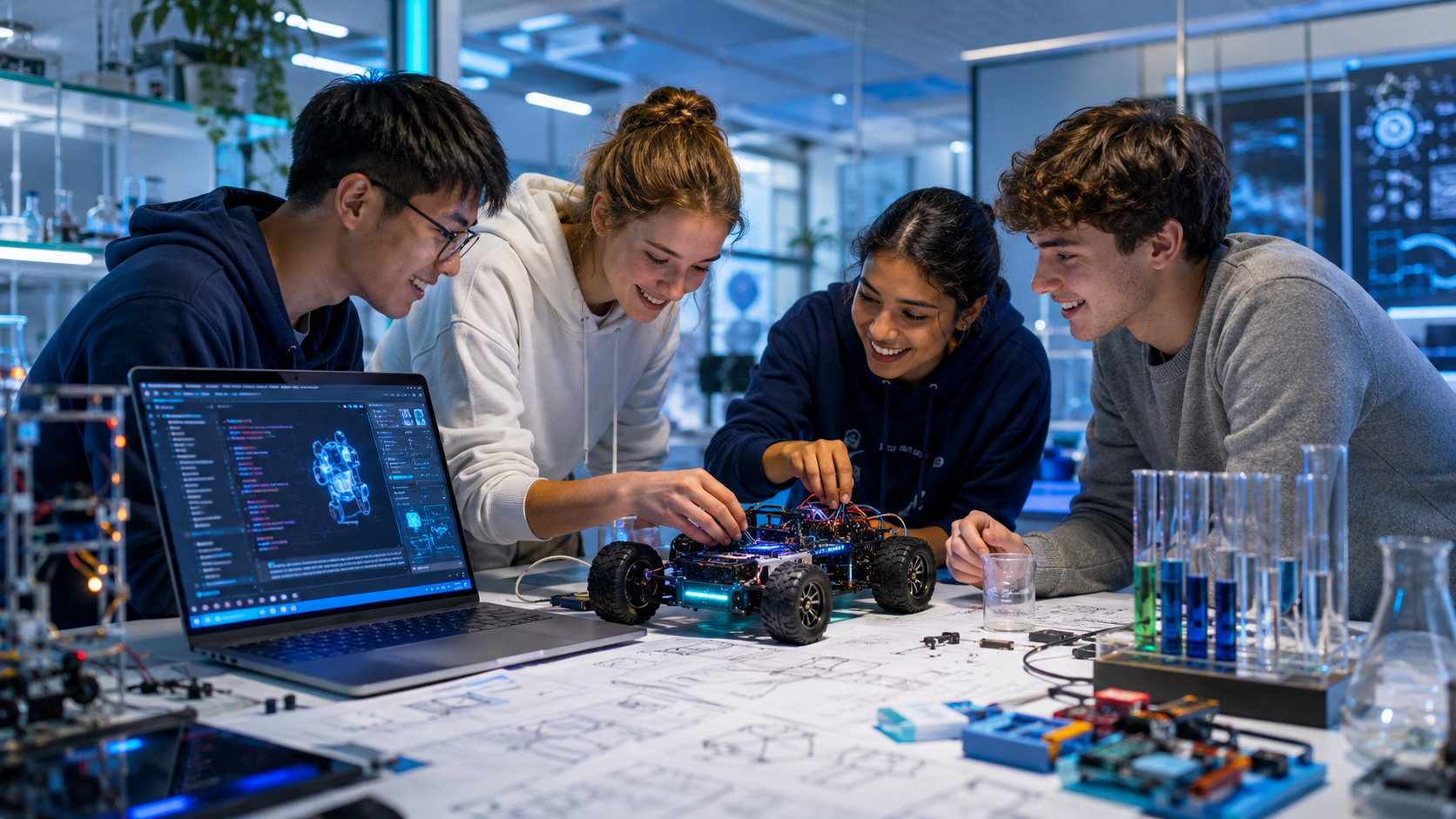
In this era of rapid technological disruption and globalization, conventional educational approaches are often considered inadequate in preparing children for future challenges. Therefore, the STEM (Science, Technology, Engineering, and Mathematics) approach—which has now evolved into STEAM by adding Art—has become increasingly popular in modern schools. STEAM is not just about teaching these subjects in isolation, but integrating them into project-based learning methods that solve real-world problems.
STEAM learning is crucial because it trains students to think integratively and creatively. In a STEAM project, students do not just memorize physics formulas or mathematical theories; they learn to apply them to build something tangible, such as designing a simple robot or creating a clean water filtration solution. Adding the arts (Art) into STEAM is vital because it teaches aesthetics, empathy, and visual communication. This proves that great technological innovations require not only strong logic but also a deep touch of human creativity to be accepted by society.
Through STEAM, students also learn to collaborate in teams, communicate effectively, and accept failure as part of the learning process. These soft skills are highly sought after by modern industries in the 21st century. By training students to be active problem solvers from an early age, STEAM-based education opens up broad career paths and prepares them to become future innovators.