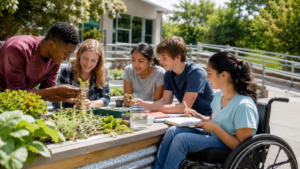
Education: Creating an Equitable Learning Environment for All Students

Inclusive education is a system that provides opportunities for all students without exception—including students with special needs, learning difficulties, or diverse socio-economic backgrounds—to learn together in regular classrooms with appropriate support. In modern international schools, implementing inclusive education is not just about formal compliance, but is the realization of human values that appreciate diversity as a learning strength.
Successful implementation of inclusive classrooms requires adequate infrastructure and resources. Schools must provide learning support assistants (shadow teachers) and competent school counselors to design Individualized Education Programs (IEPs) tailored to each student’s unique needs. Furthermore, differentiated instruction must be applied by classroom teachers so that learning materials can be accessed and understood by all students with different learning styles fairly.
For neurotypical students, learning in an inclusive environment offers invaluable life lessons not written in academic textbooks. They learn firsthand about empathy, tolerance for differences, and how to help others with limitations. This experience of interacting in diversity shapes students’ character into socially sensitive, kind individuals ready to be part of an inclusive, just global society.